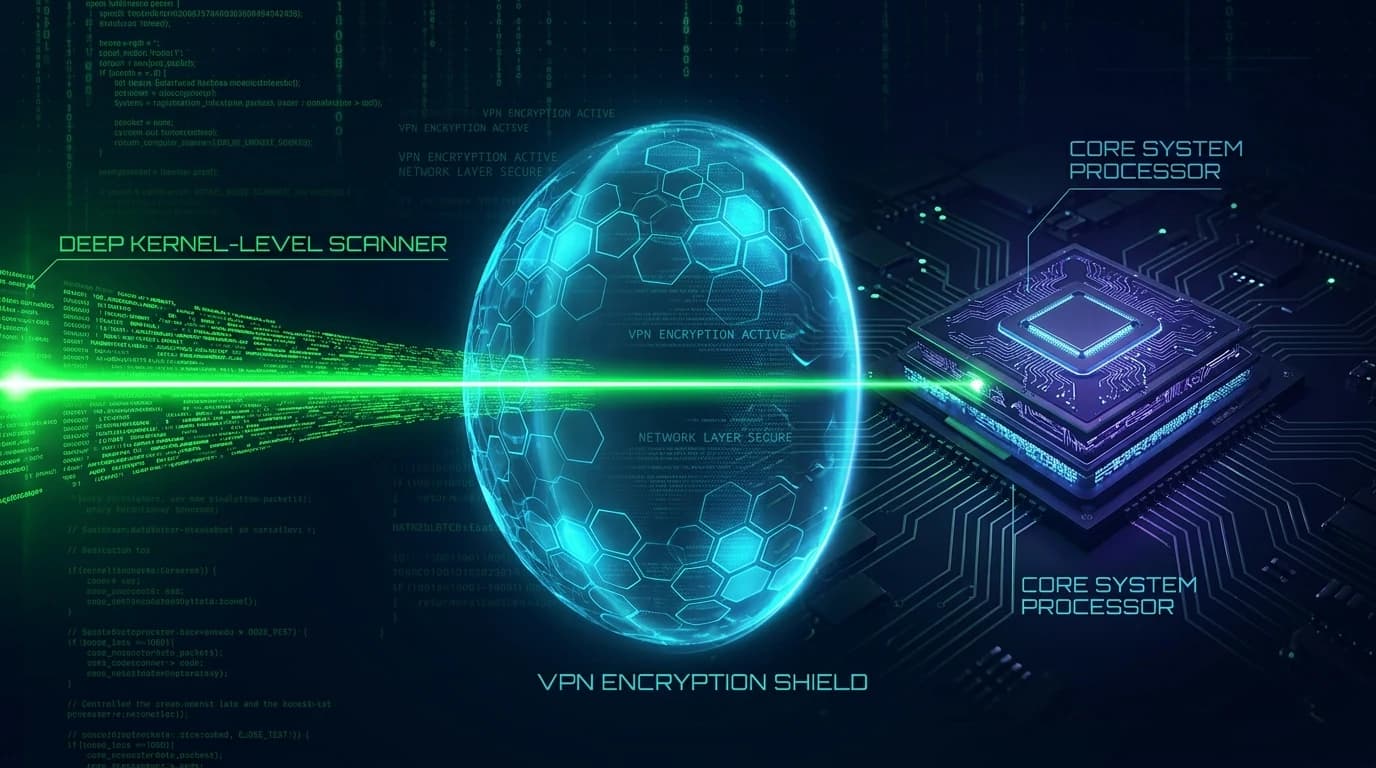
The Popular Myth: Can a VPN Hide You from Anti-Cheat Systems?
A prevalent myth across online gaming communities suggests that connecting to a Virtual Private Network (VPN) prevents game developers from banning your computer or tracking your identity. In reality, VPNs provide zero protection against anti-cheat bans and hardware identification.
Understanding why requires a technical look at the separation between Network Layers and Kernel-Level Operating System Privileges.
Network Layer (VPN) vs Kernel Layer (Anti-Cheat)
When you enable a VPN:
- The VPN creates an encrypted virtual network adapter that reroutes your outbound internet traffic through a remote server.
- Game servers see the remote VPN server IP address instead of your residential home IP.
However, modern anti-cheat solutions (including Riot Vanguard, Easy Anti-Cheat, BattlEye, and Activision Ricochet) do not run on the remote web server. They execute locally on your physical machine with kernel-level (Ring-0) administrative privileges.
Because the anti-cheat software resides inside your operating system kernel, it directly reads motherboard serials, TPM hashes, RAM memory spaces, and running process trees. Changing your outward IP address via a VPN has zero effect on what the local kernel driver inspects.
What VPNs ARE Good for in Gaming
While VPNs cannot bypass anti-cheat detections, they serve vital security functions for competitive gamers:
- DDoS Mitigation: Shields your true residential IP from packet floods during tournaments. Review our ranked game DDoS protection guide.
- ISP Throttling & Routing Optimization: Bypasses poor ISP peering routes to stabilize packet delivery. See our analysis on gaming VPN routing and ping latency.
- Public Wi-Fi Encryption: Prevents credential snooping when playing on shared airport or university networks.
Audit your connection security, verify active VPN tunnels, and test roundtrip edge latencies on our free real-time IP checker.