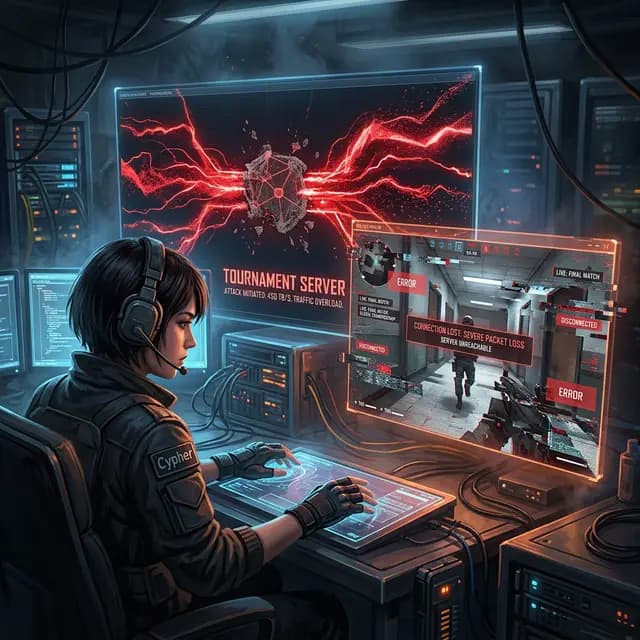
The Digital Drop-Hack
Competitive gaming in titles like Valorant, Call of Duty, and Rainbow Six Siege is ruthless. But the most frustrating loss doesn't come from getting out-aimed; it comes from an abrupt, catastrophic failure of your internet connection exactly at match point.
A Distributed Denial of Service (DDoS) attack in gaming is no longer reserved for high-level esports tournaments. Angry teenagers running cheap "IP Stressers" (booter services) can target you specifically, flooding your home router with junk data until your connection simply collapses under the weight.
How the Hacker Gets Your IP
A hacker cannot DDoS your gamertag or your character. They must send the malicious traffic directly to the physical Public IP Address associated with your home. The flaw lies in how the game handles voice chat and matchmaking.
- P2P Matchmaking: Older games and certain lobby configurations still use Peer-to-Peer (P2P) connections. Instead of everyone connecting to a central Riot Games or Activision server, one player acts as the "Host". If you connect to the host, your IP is completely visible to them.
- Voice Chat Exploits (VoIP Leaks): Even on dedicated servers, third-party communication tools or in-game voice chat features have historically leaked IP addresses via WebRTC exploits.
- IP Resolvers: Hackers use illegal websites known as "Resolvers" which maintain massive databases linking Xbox Gamertags or PlayStation Network IDs directly to the last known IP address of that user.
The Anatomy of the Attack
Once the disgruntled opponent has your IP, they paste it into a dark-web booter panel. They pay $5 in Bitcoin and press "Attack". A network of thousands of infected computers (a Botnet) simultaneously starts sending UDP packets to your home router's public address.
Your router cannot process legitimate game data (your movement and shooting) because completely overwhelmed trying to discard the millions of junk requests. Your ping spikes to 4,000ms, your game client times out, and you lose the ranking points.
How to Bulletproof Your Connection
You cannot stop a botnet from sending data, but you can hide the target.
- The Gaming VPN: Using a specialized gaming VPN routes your connection through an intermediate server. If the hacker pulls your IP, they pull the VPN's datacenter IP, not your home IP. When they attack, the VPN's enterprise-grade mitigation hardware effortlessly absorbs the 500 Gbps attack, while your gameplay continues uninterrupted.
- Resetting Your Current IP: If you are actively being targeted and your internet is down, immediately unplug the power from your modem. Wait 10 minutes. Most consumer ISPs use Dynamic DHCP leasing and will assign you a brand new, clean IP address when the modem reboots.
Before launching a competitive match, look at your external footprint on our free IP lookup. If your real city and ISP are showing, you are fundamentally vulnerable to a targeted drop-hack.