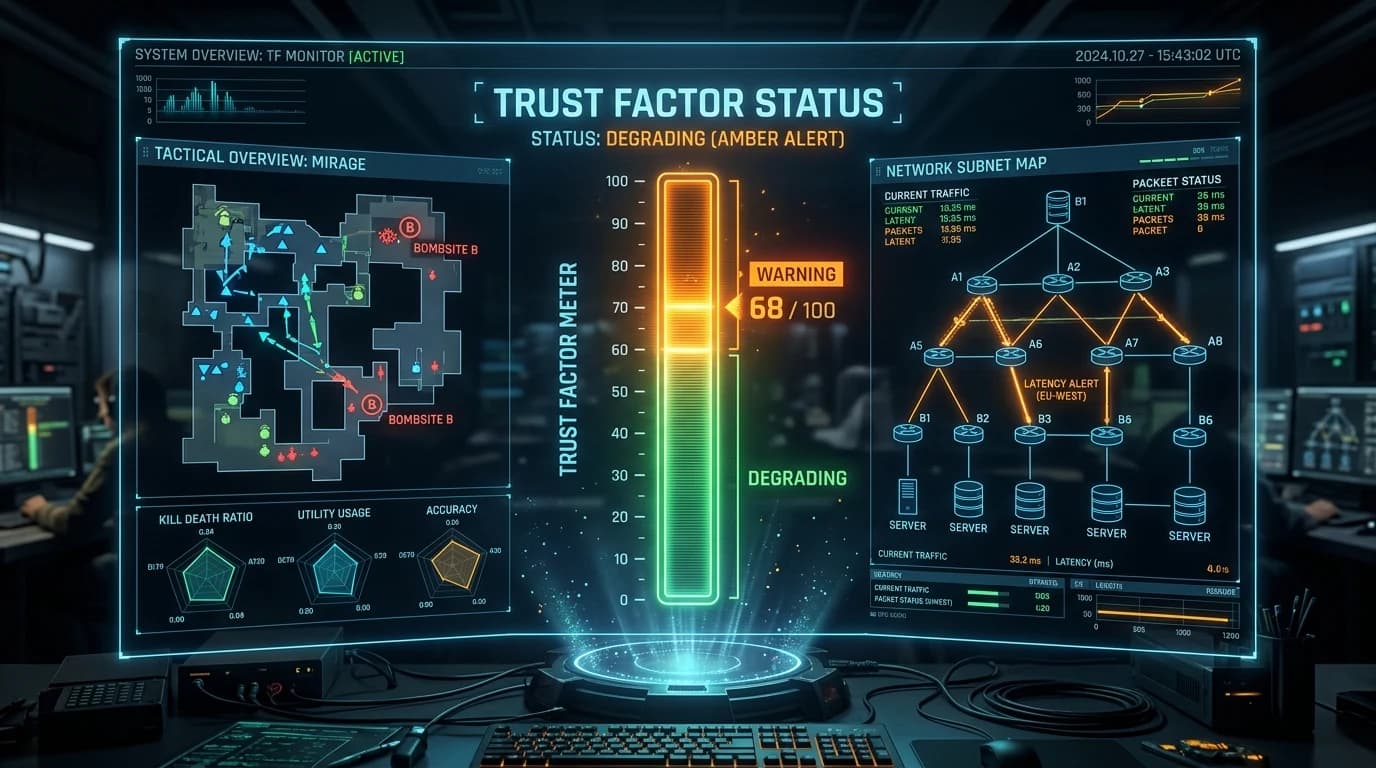
Demystifying Counter-Strike 2 Trust Factor
In Counter-Strike 2, match quality is dictated by a covert numerical metric known as Trust Factor. Players with high Trust Factor experience clean, competitive matches against verified veterans, while players with low Trust Factor are quarantined into lobbies plagued by toxic behavior, throwers, and suspected cheaters.
How Valve AI Uses IP Reputation in Trust Calculations
While Valve keeps the exact Trust Factor neural network secret, patent filings and machine learning disclosures reveal that network IP reputation is a vital input vector:
- Shared Subnet Clustering: If multiple Steam accounts that were previously VAC-banned originate from your exact residential IP address, your primary account Trust Factor takes a statistical penalty.
- Commercial VPN & Proxy Detection: Playing on commercial VPN exit nodes or datacenter IPs (which are frequently recycled by cheaters) lowers connection trust scores. Review our analysis on residential vs datacenter IP classifications.
- Rapid Geographic IP Switching: Logging in from drastically different geographic regions within unrealistic timeframes triggers automated security review flags.
5 Proven Steps to Restore a Degraded Trust Factor
- Play on a Consistent Residential Connection: Avoid using public Wi-Fi or rotating VPN nodes while playing Premier or Competitive CS2.
- Enable Steam Guard Mobile Authenticator: Attach a unique, verified phone number to your primary Steam account.
- Avoid Linking Multiple Alt/Smurf Accounts: Logging into multiple low-hour accounts from the same PC creates negative algorithmic correlation.
- Participate Actively in the Steam Community: Regular marketplace trades, community guides, and verified game reviews positively influence account longevity score.
- Audit Network Latency & Vulnerabilities: Check your connection stability on our free CS2 network diagnostic tool.