The 0.5 Second Sellout
It's 9:59 AM. You are staring at a webpage, waiting for an exclusive shoe drop or Taylor Swift tickets to go on sale. At exactly 10:00 AM, you click "Add to Cart". The page loads for three seconds, and then you see the crushing message: "Sold Out."
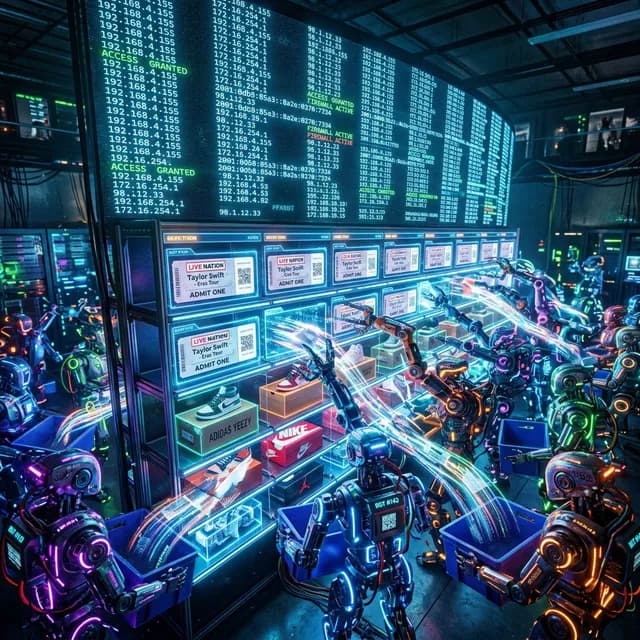
You didn't lose to a faster human. You lost to a software architecture capable of automating the entire checkout process—including solving Captchas and submitting credit card details—in under half a second. These are "Sneaker Bots" (or retail software modules), and their entire existence depends on outsmarting IP Address tracking.
The Retail Defense: IP Bans and Rate Limits
Sites like Ticketmaster, Shopify, and Nike use advanced anti-bot (WAF) protections like Cloudflare or Akamai. Their primary defense is simple math: if a single IP address attempts to refresh a product page 100 times in 5 seconds, or attempts to add 50 pairs of shoes to a cart simultaneously, the firewall instantly permanently bans that IP.
If a bot runner tries to use their home Wi-Fi connection, their robot will be banned before the sale even technically begins.
The Bot Offense: Rotating Proxy Pools
To defeat strict e-commerce firewalls, bot runners spend thousands of dollars on Rotating Proxy Networks. Here is the exact playbook they use to destroy ticket queues:
- The Bot Setup: The user loads 5,000 distinct generic credit cards (VCCs) and 5,000 slightly modified shipping addresses into the bot software.
- The Proxy Pool: The user connects the bot to a massive pool of Residential Proxies. (Remember, retail sites instantly block datacenter IPs. The bot must look like a normal human on an AT&T or Comcast connection).
- The Attack (Tasks): When the sale goes live, the bot launches 5,000 asynchronous "Tasks". Each task handles one checkout attempt.
- The IP Rotation: Crucially, every single one of those 5,000 tasks is routed through a different residential IP address in the proxy pool.
Why It Works (And Breaks the Internet)
From the perspective of Shopify's security firewall, they are not seeing one hacker sending 5,000 requests. Because the IPs are rotating perfectly, the firewall sees 5,000 completely separate human beings, scattered across different living rooms in different states, all clicking "Buy" at the exact same moment.
To test if your current IP looks trustworthy enough to buy high-demand items, use an IP checker online to ensure your connection has a low Fraud Score and is registered as a clean residential ISP connection before a major hype drop.