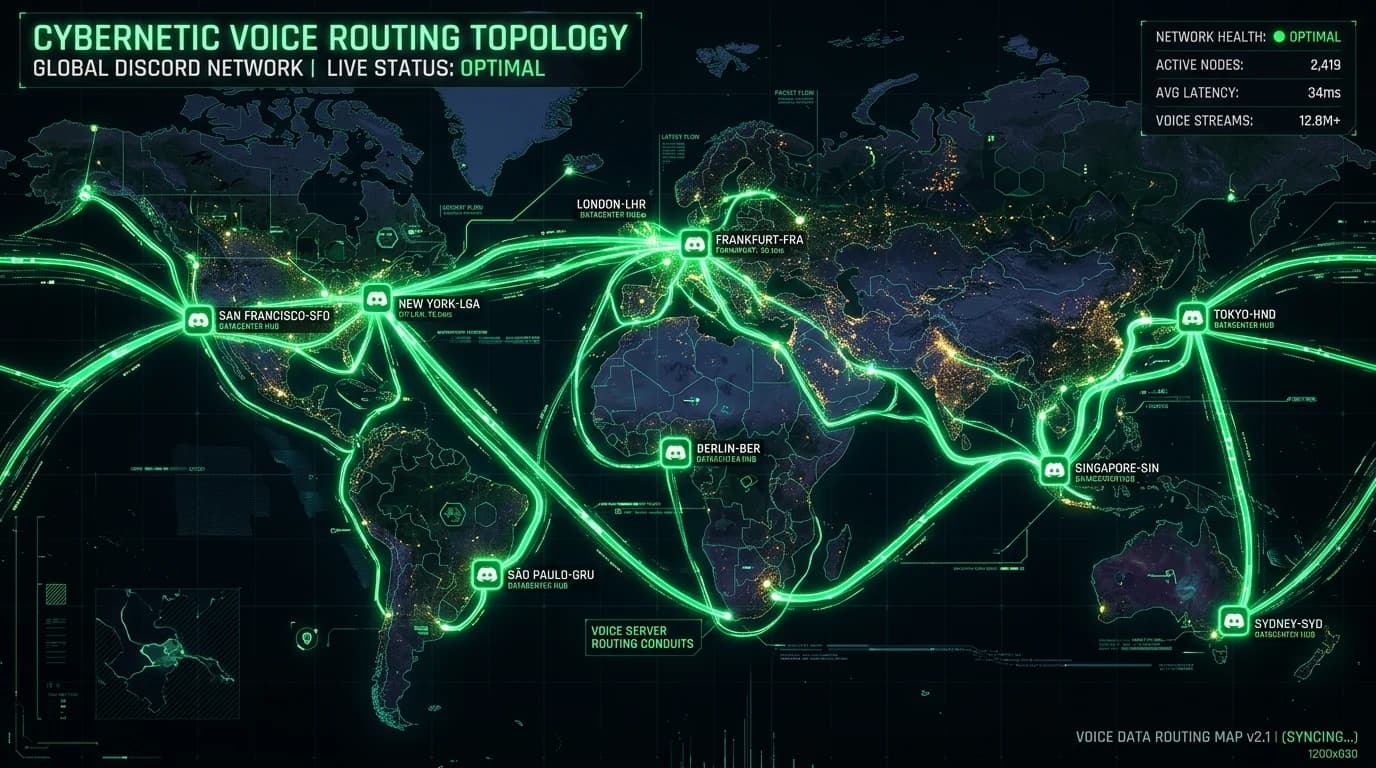
The Architecture of Discord Voice Channels
With hundreds of millions of daily active users, Discord handles billions of minutes of voice and video calls every month. Unlike legacy gaming VoIP tools (like early TeamSpeak or Skype) that relied on direct Peer-to-Peer connections, Discord routes all voice communication through a globally distributed network of WebRTC Voice Gateways.
How Discord Voice Gateways Shield Member IP Addresses
When you join a voice channel in a Discord server:
- Client-to-Server Encryption: Your client establishes an encrypted DTLS-SRTP tunnel directly to a Discord Voice Server (located in regions like US East, Rotterdam, Brazil, or Sydney).
- No Peer-to-Peer Socket: Other members in the same channel only receive voice packets relayed by the Discord server. They never establish a socket connection with your home router.
- Automatic Region Overrides: Discord uses automatic ping measurement to select the optimal datacenter region for all participants, minimizing packet loss and jitter.
When Can Voice Traffic Cause Latency Spikes?
If participants are geographically dispersed (e.g., North America and Australia in the same voice room), routing through an intermediate server can introduce routing hops. To troubleshoot routing latency:
- Server administrators can manually override the channel voice region in Channel Settings → Overview → Region Override.
- Select a central hub location (such as US Central or Western Europe) to balance ping evenly among international participants.
Learn more about how link traps attempt to bypass voice server shielding in our guide on Discord IP resolver myths and truths.
Audit your network connection routing and public IP reputation on our free real-time IP diagnostic tool.