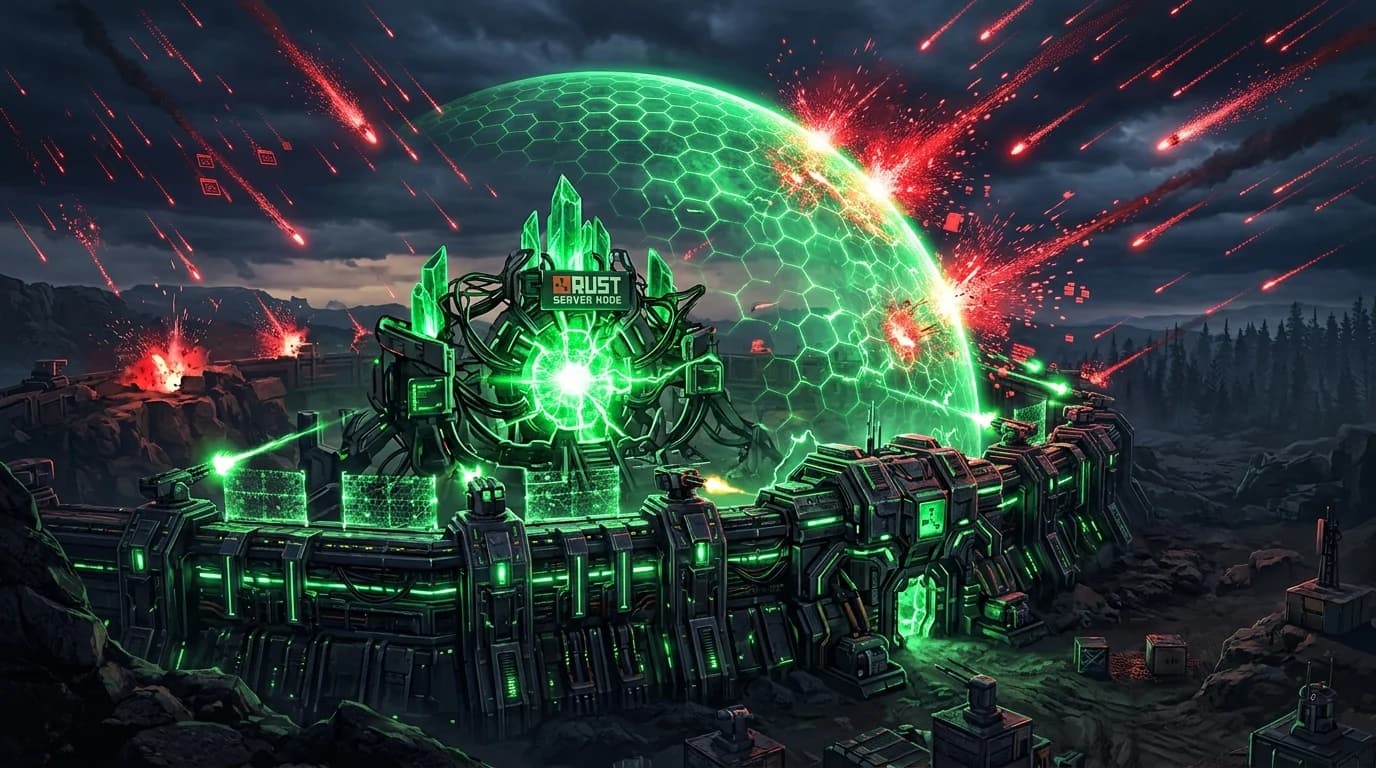
The Brutal Realities of Rust Server Hosting
In high-stakes survival games like Rust, rival clans and salty players frequently purchase booter services to knock competing community servers offline during raid hours. Running a smooth 300+ player server requires robust UDP game filtering and strict RCON administrative isolation.
The Anatomy of UDP Game Floods on Port 28015
Rust utilizes the RakNet networking protocol over UDP. Attackers flood port 28015 with malformed UDP payloads to exhaust server memory buffers:
- RakNet Handshake Flood: Spoofed connection requests exhaust open player connection queues.
- UDP Amplification (NTP/SSDP): Multi-gigabit reflection floods saturate the server upstream uplink.
- RCON Brute-Force (Port
28016): Automated botnets spam web RCON endpoints attempting to guess administrative passwords and execute server wipe commands.
Essential Rust Server Hardening Checklist
- Deploy on Anti-DDoS Game Infrastructure: Host exclusively on networks equipped with hardware game scrubbing (e.g., OVH Game, Path.net, or Cosmic Guard) that inspect RakNet packet headers in real time.
- Bind RCON to Localhost: Never expose port 28016 to
0.0.0.0. Bind to127.0.0.1and manage the server via SSH tunneling or VPN. - Implement Query Port Rate Limiting: Apply iptables rate-limiting rules on Steam A2S query ports (
28017) to prevent CPU starvation.
Review our analysis on Rust player IP tracking and BattleMetrics telemetry.
Verify that your server origin IP is hidden using our free online IP scanner.