The Physical Attack Surface of Crypto Hardware
Hardware wallets like Ledger, Trezor, Coldcard, and Tangem are considered the gold standard of cryptocurrency self-custody. However, if the device is intercepted or altered before reaching the user hands, cold storage security is completely invalidated.
The Top 3 Supply Chain & Retail Vectors
- The "Pre-Generated Seed" Scratch Card: Scammers sell modified hardware wallets containing a professional-looking "Setup Card" with a pre-scratched 24-word recovery seed. The attacker already owns the private keys and drains deposited funds immediately.
- Compromised Third-Party Retailers: Purchasing hardware wallets from unverified resellers on Amazon, eBay, or AliExpress where malicious actors flashed modified custom bootloaders.
- Impostor Desktop Companion Apps: Malicious Google Ads pushing fake "Ledger Live" or "Trezor Suite" desktop apps designed to prompt users to type their 24 recovery words into a software form.
How to Verify Hardware Authenticity with 100% Certainty
- Buy Exclusively from the Official Manufacturer: Avoid third-party resellers whenever possible.
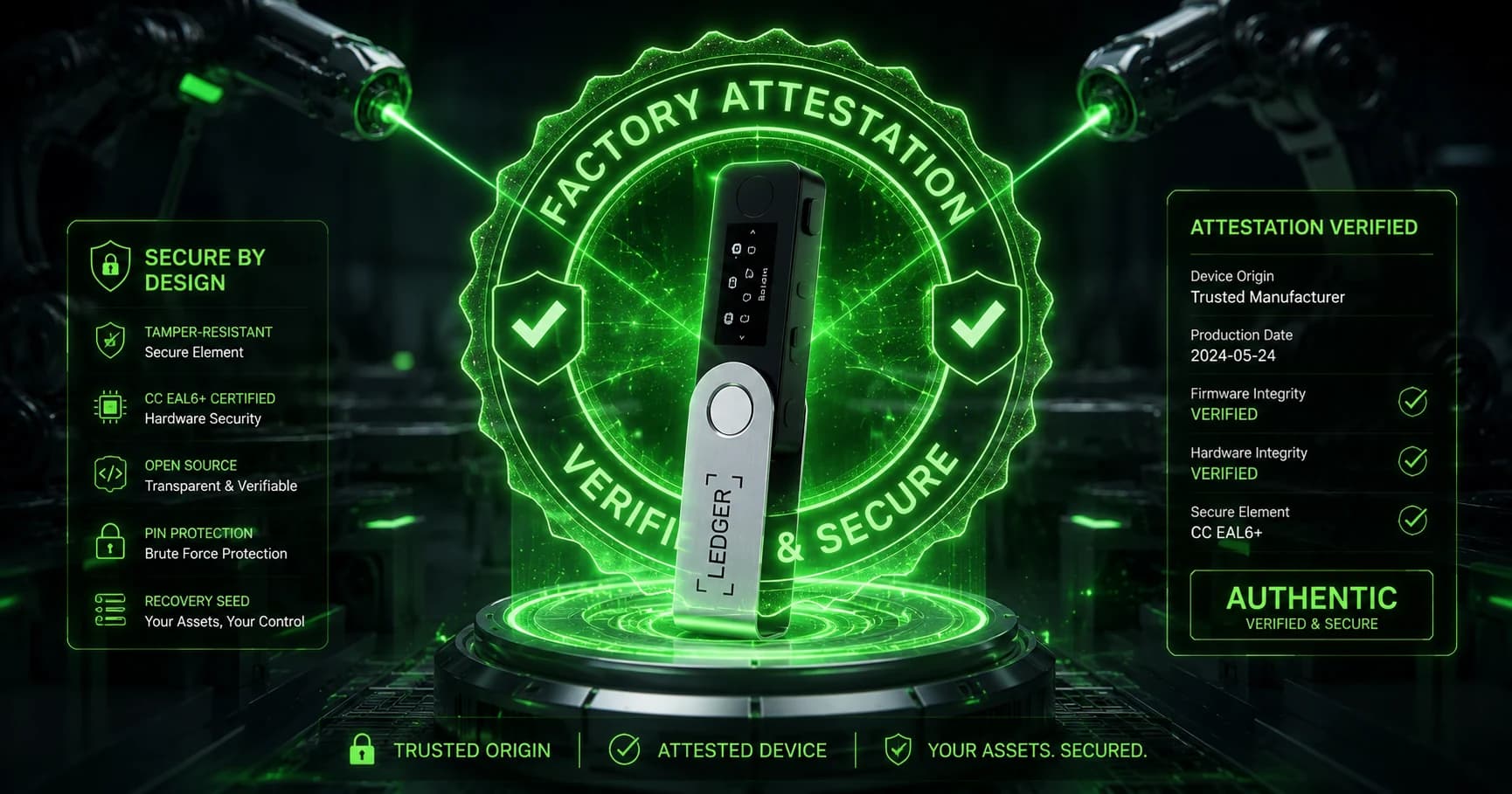
- Cryptographic Attestation Verification: Official companion apps (e.g., Ledger Live Genuine Check) query the device Secure Element chip with a cryptographic challenge to verify factory signature authenticity.
- Generate Seed on the Device Screen: A legitimate hardware wallet will always generate and display its 24 seed words exclusively on its physical onboard OLED screen upon first boot.
Read our analysis on BIP-39 passphrases and hidden multi-vault security.
Audit your connection privacy and verify zero WebRTC leaks using our free Web3 network inspector.