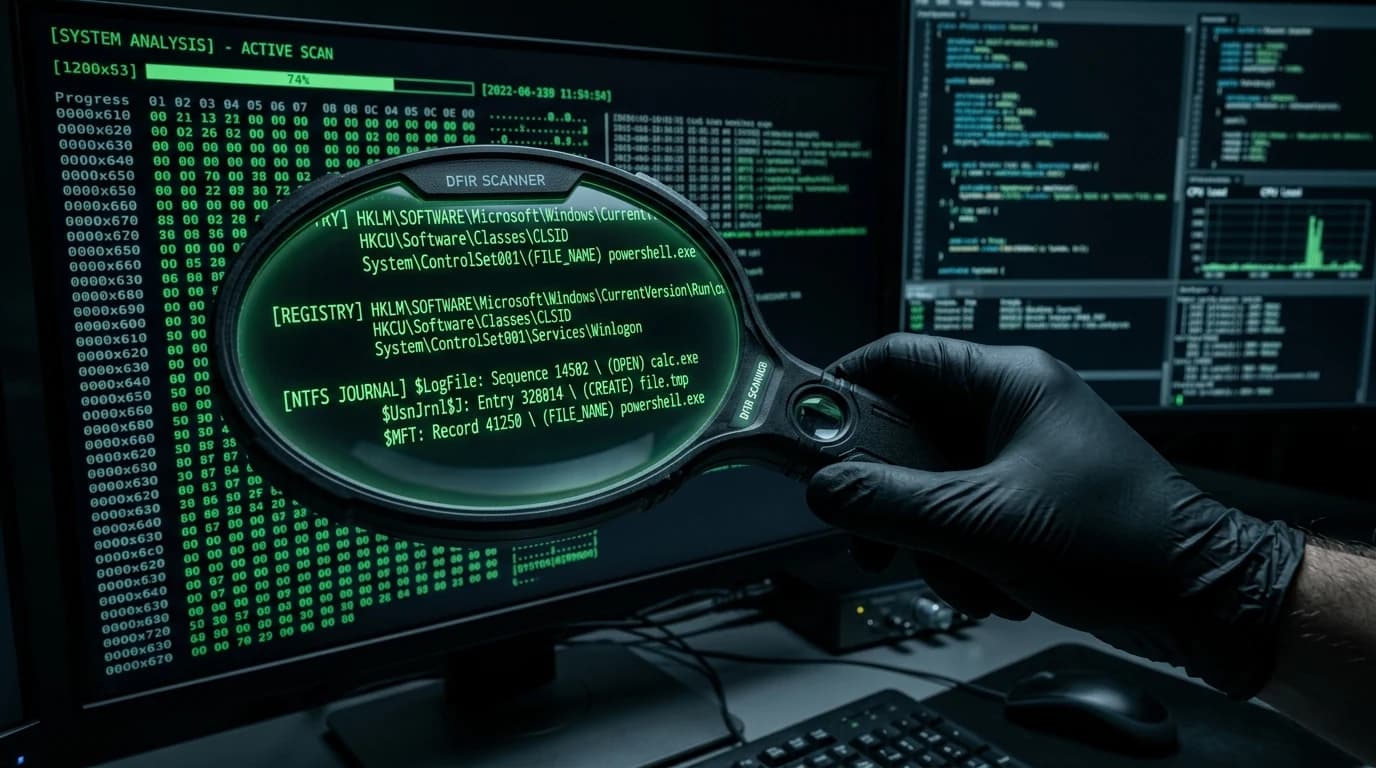
The Overlooked Vector: Persistent OS Trace Artifacts
When players attempt to bypass a hardware ban using commercial HWID spoofers, they are often re-banned within minutes—even if their motherboard and disk serials were modified. This happens because modern anti-cheats (Vanguard, EAC, BattlEye) deploy Deep OS Forensic Scanners to identify persistent trace files.
Where Anti-Cheats Plant & Read Tracking Markers
- NTFS USN Change Journals: The NTFS filesystem records every file creation, rename, and deletion in a low-level binary log. Anti-cheats scan the USN Journal for historical records of banned game accounts.
- Windows Prefetch & ShimCache: Windows caches executable execution metadata in
C:\Windows\Prefetch, logging past game launches and cheat loaders. - Hidden Obfuscated Registry Keys: Anti-cheats write encrypted telemetry tokens in non-standard registry branches (e.g., hidden under
HKLM\SOFTWARE\Microsoft\Windows NT\CurrentVersion\Image File Execution Optionsor CLSID COM registrations).
Why "Cleaners" Often Cause System Instability
Aggressive cleaner scripts that wipe registry keys and format drives often break core Windows services, triggering Blue Screens of Death (BSODs) without actually clearing kernel-level TPM endorsements. Learn more in our guide on motherboard BIOS modification risks.
Audit your network profile and verify your outward telemetry on the DCIPCHECK intelligence portal.