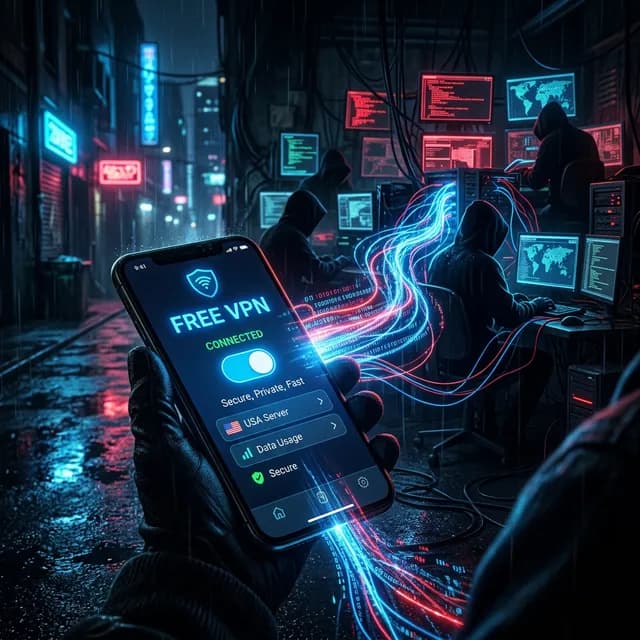
The Illusion of Free Privacy
Search 'VPN' on any app store, and you'll be greeted by hundreds of brightly colored applications promising "100% Free, Unlimited Speed, Military-Grade Encryption." The temptation to install them to bypass a school Wi-Fi block or watch international Netflix is high.
However, running a global network of high-speed servers costs hundreds of thousands of dollars a month. If an app isn't charging you a subscription fee, how are they paying those bills? The answer is dark: They monetize you.
Monetization Tier 1: Data Harvesting
The primary purpose of a VPN is to route all your internet traffic through a single tunnel. When you use a shady free VPN, you are handing the keys to your digital life directly to an unknown developer, often based in jurisdictions with zero privacy laws.
These apps meticulously log your browsing history, your DNS requests, and the timestamps of your app usage. They then package this data and sell it to advertising networks, data brokers, and analytics firms. Instead of protecting your privacy, they centralize the surveillance.
Monetization Tier 2: The Exit Node Nightmare
The most dangerous free VPNs (famously, services like Hola VPN in the past) don't use expensive data centers to route your traffic. Instead, they use a Peer-to-Peer (P2P) model.
When you agree to their Terms of Service, you allow the app to turn your smartphone or PC into an Exit Node for the rest of their network. When someone else in the world uses the free VPN, their traffic is routed through your device. They are browsing the web using your public IP address.
"If a malicious user on the other side of the world decides to download illegal material, launch a DDoS attack, or attempt credit card fraud using the free VPN, the authorities will trace the IP address back to one place: Your living room router."
How to Audit Your Connection
Never trust a free security product unconditionally. If you absolutely must use one, or suspect an app is acting as a stealth proxy:
- Check Your IP Status: Turn the free VPN on. Go to a check my public IP. Look at the ISP. Does it look like a major server provider (like Datacamp or M247), or does it look like a residential connection in a random city? If it's residential, you are likely part of a P2P botnet.
- Check for DNS Leaks: A poor-quality VPN will fail to route your DNS queries properly, leaking your true location immediately (as discussed in our DNS leak guide).
- Pay for Privacy: Invest in a verified, "No-Logs" audited premium VPN. When it comes to routing your personal web traffic, you get exactly what you pay for.