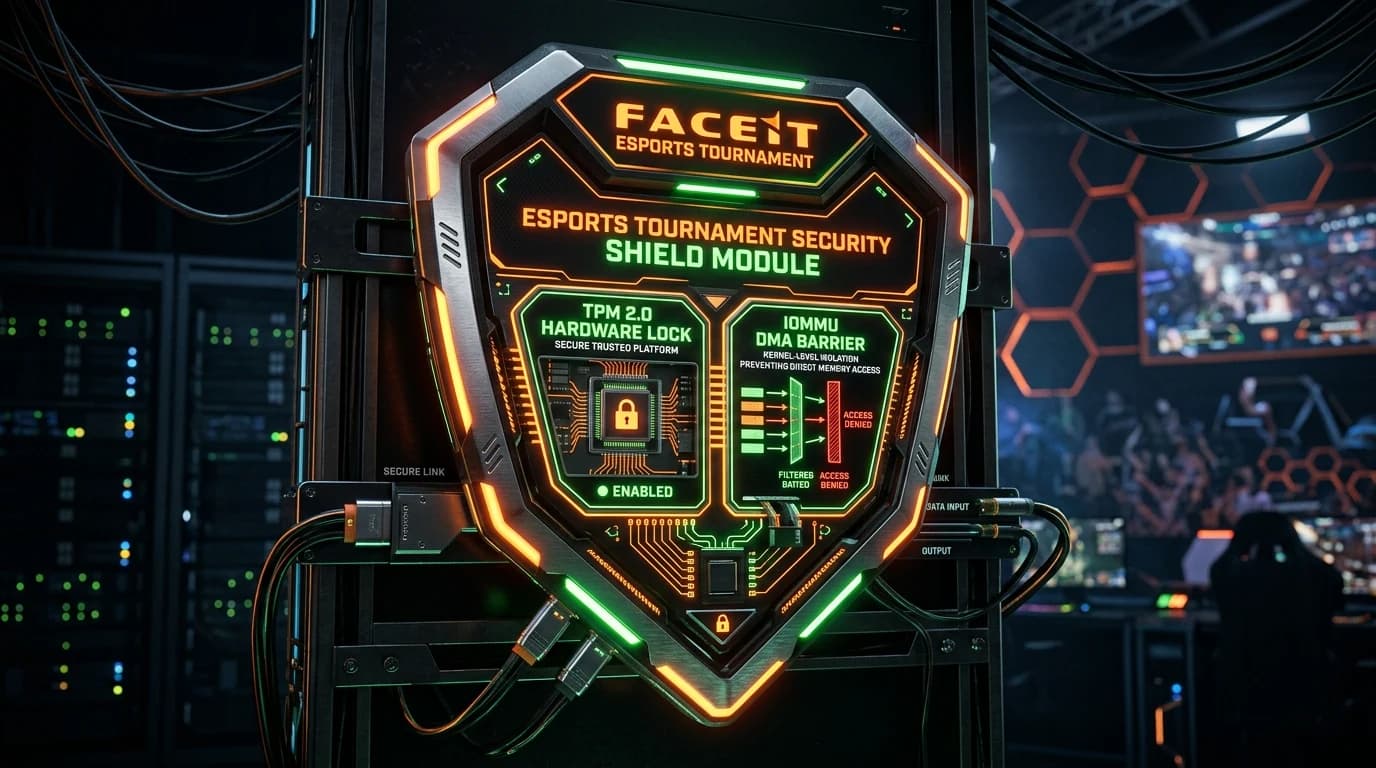
The Gold Standard of Competitive Esports Anti-Cheat
In high-stakes esports tournaments where prize pools reach millions of dollars, client-side software anti-cheats are insufficient. The two most formidable proprietary systems in gaming today are Riot Vanguard (Valorant) and FACEIT Anti-Cheat (Counter-Strike 2).
Comparative Architecture: FACEIT AC vs Riot Vanguard
| Security Feature | Riot Vanguard | FACEIT Anti-Cheat |
|---|---|---|
| Driver Startup Model | Boot-Start (Starts with Windows at power-on) | On-Demand (Starts when FACEIT client launches) |
| TPM 2.0 Attestation | Mandatory on Windows 11 | Mandatory for flagged/high-risk accounts |
| UEFI Secure Boot | Mandatory | Mandatory |
| DMA Card Mitigation | Heuristic scanning + IOMMU checks | Hardware IOMMU memory domain isolation |
Why Hardware Attestation Wins the War
By enforcing UEFI Secure Boot and TPM 2.0 endorsement key attestation, both platforms ensure that the Windows kernel is cryptographically genuine and unpatched before allowing players into competitive lobbies.
Review our deep dive on TPM 2.0 Endorsement Key (EK) cryptographic attestation.
Audit your network connection latency on our free online IP scanner.