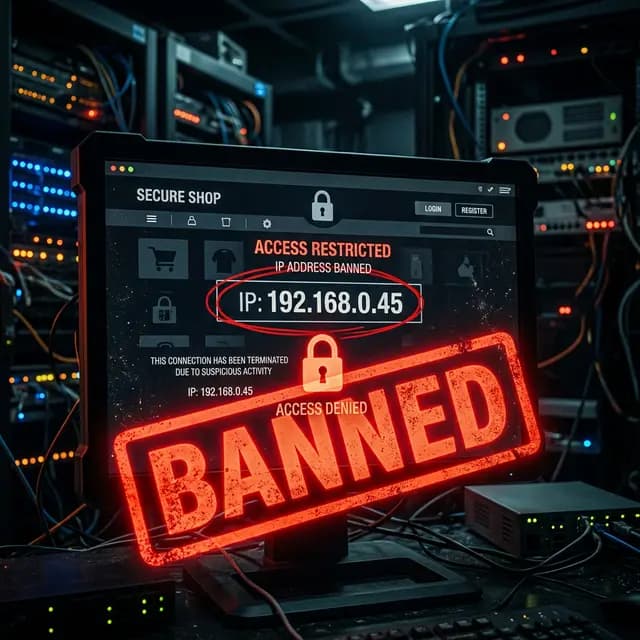
The Dropshipper's Nightmare
You found the perfect winning product. You designed a high-converting Shopify store. You spent $500 on Facebook Ads. The traffic rolls in, the first customer hits "Checkout", and immediately your Stripe account is permanently locked, and Shopify places your store under review.
You didn't sell anything illegal, so what went wrong? In the ultra-strict landscape of 2026 e-commerce, the anti-fraud algorithms don't just judge your product; they judge your network environment.
The Risk Score of Your IP Address
Payment processors like Stripe, PayPal, and Shopify Payments absorb massive financial losses from credit card chargebacks. To mitigate this, they employ machine learning models that assign a Fraud Risk Score to you, the merchant, the moment you register.
The most common triggers for an automatic, irreversible IP ban include:
- The Geography Mismatch: This is the #1 killer for international dropshippers. If you incorporate an LLC in the United States and register an American Stripe account, but your login IP address consistently originates from a residential connection in Eastern Europe or Southeast Asia, the system flags the account as hijacked or fraudulent.
- Using Cheap VPNs to Fake Location: Merchants often try to solve the mismatch above by turning on a commercial VPN (like NordVPN or ExpressVPN). Stripe's security easily detects data-center IPs. Logging into a financial portal using a known proxy IP guarantees an instantaneous freeze.
- The Tainted IP (Coffee Shop Syndrome): If you build your store using the public Wi-Fi at a Starbucks, you are sharing an IP with thousands of strangers. If one crypto-scammer or banned merchant used that same Wi-Fi last week, that public IP is blacklisted. Guilt by association.
How to Setup Safely (The Infrastructure)
To run a borderless business, you must treat your digital footprint like a strict corporate asset.
1. The RDP / VPS Solution
If you live outside the country where your business is legally registered, do not use a standard VPN. Instead, rent a Windows VPS (Virtual Private Server) or an RDP (Remote Desktop Protocol) hosted in the target country (e.g., an AWS workspace in Virginia). You log into that distant computer, and you only access your Stripe and Shopify dashboards from that machine's dedicated processor and clean, static IP.
2. Dedicated Residential Proxies
If you must use a proxy, it must be a Dedicated Residential Proxy purchased from a specialized business provider. This gives you an IP address that belongs to a real home ISP in your target country, not a server farm.
3. Isolate Your Environments
If you run multiple stores (for different niches), never let them cross paths. Managing three different Shopify sites from the exact same browser profile and IP means if one store gets banned for high chargebacks, the algorithm will automatically nuke the other two. Use anti-detect browsers (like Multilogin or GoLogin) combined with distinct proxies for each enterprise.
Before ever submitting your ID to a payment gateway, run a comprehensive check on public IP address lookup. If the ISP shows up as "Hosting" or your Fraud Score indicates any proxy usage, do not proceed with registration.